Recently, a research team led by Professor Ting Chen at the Department of Computer Science and Technology, Tsinghua University, in collaboration with Beijing University of Posts and Telecommunications, Monash University, and Shenzhen University, proposed an artificial intelligence algorithm named UniAIR (Unified Adaptive Immune Recognition). By unifying the modeling of multimodal information at immune binding interfaces, UniAIR enables mutation effect prediction with strong generalization across different binding systems and a wide range of application scenarios in adaptive immunity. This capability is expected to accelerate viral mutation analysis and antibody optimization, providing methodological support for immunotherapy research.
The research article, titled "Generalizable mutation-effect prediction across adaptive immune recognition via unified multimodal framework", was published in Nature Machine Intelligence on May 27. Reviewers highlighted that "the study represents a promising step toward establishing a generalizable computational framework for modeling mutation landscapes in adaptive immunity."
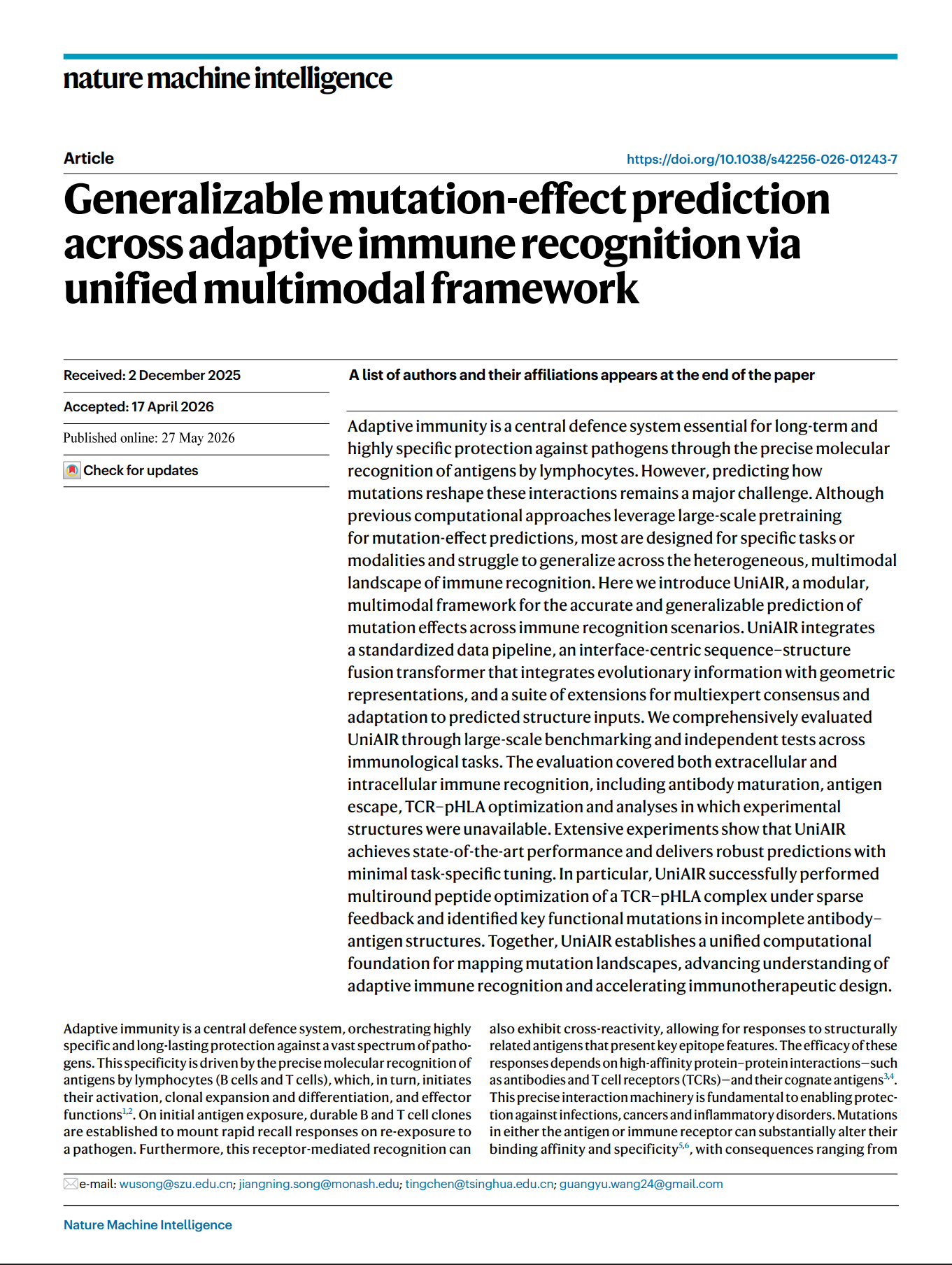
Figure 1. The research findings published in Nature Machine Intelligence
Adaptive immunity consists of two major branches, humoral and cellular immunity, which work cooperatively to form the foundation of the body's long-term protection and antigen-specific immune responses. Their core mechanisms rely respectively on antibodies produced by B cells and on T cell receptors (TCRs), which precisely recognize and bind antigens. Amino acid mutations at these binding interfaces can alter recognition strength and binding specificity, directly affecting antibody drug development, viral protection, tumor treatment, and immunotherapy.
Because of the enormous space of possible mutation combinations and the complex mechanisms by which mutations influence immune molecular interactions, exhaustive experimental testing is costly and time-consuming. Deep learning models have therefore become important tools for candidate screening and mechanistic analysis. However, existing methods are often designed for a single immune system or a single task, and they commonly show limited prediction stability and poor cross-scenario transferability under real-world conditions, such as heterogeneous data sources and missing structural information.
To address these challenges, UniAIR uses modular data-processing tools to integrate immune complex information from diverse sources into mutation-centric binding-interface representations. Through a multimodal learning module, UniAIR combines evolutionary sequence signals from protein language models with geometric information from three-dimensional interface structures. It further integrates predictions across multiple structural views using a multi-expert fusion strategy. For scenarios in which experimental structures are unavailable and predicted structures must be used as input, the team further designed a lightweight latent-space adaptation module (UniAIR-LT) to reduce prediction bias caused by discrepancies between predicted and experimentally determined structures.
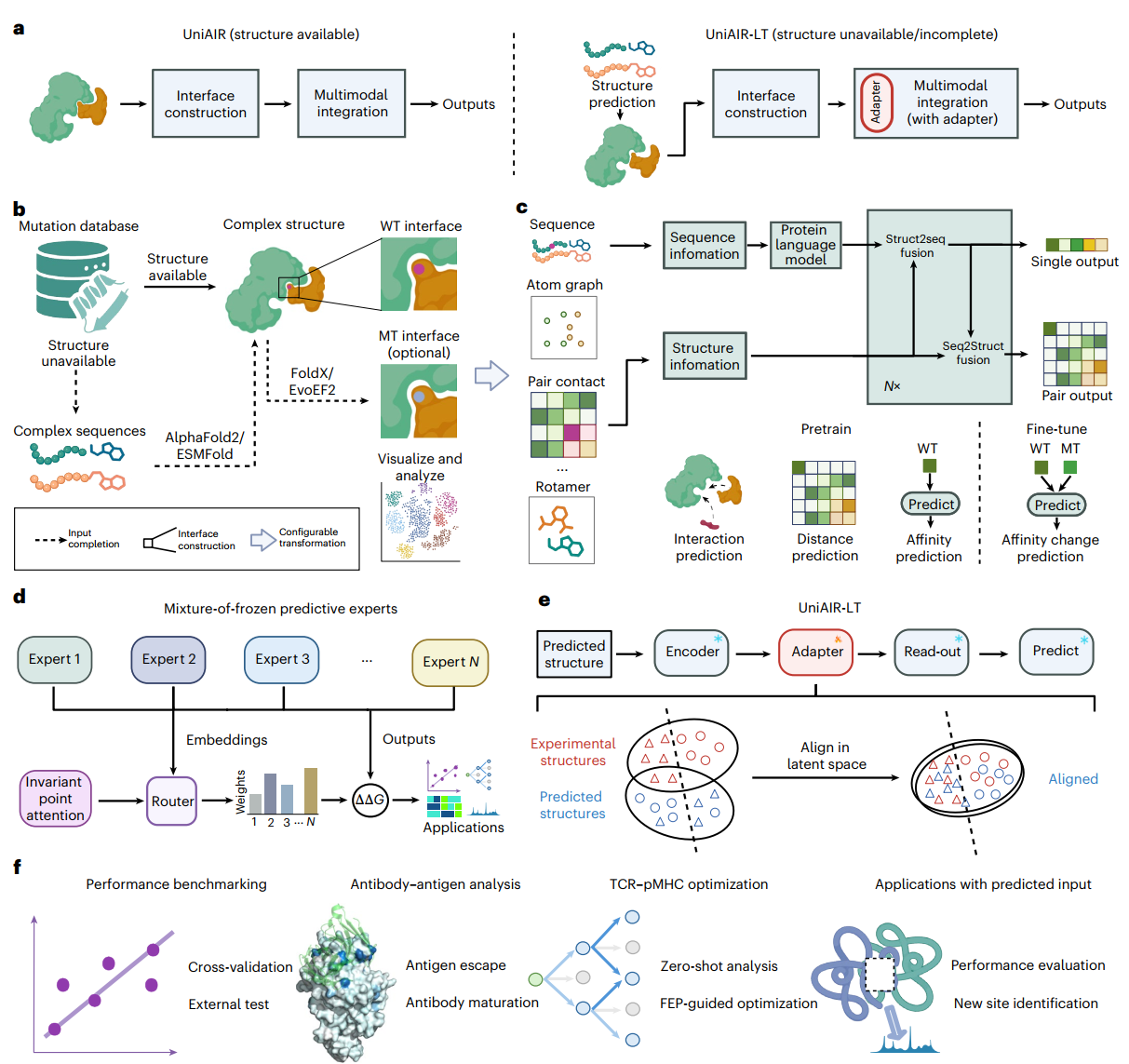
Figure 2. The overall framework of UniAIR (a–e) and its applications (f)
UniAIR was evaluated across representative adaptive immune systems, including antibody–antigen and TCR–pMHC interactions, covering application scenarios such as antibody maturation, antigen escape, and TCR–pHLA mutation mechanism analysis. The results show that UniAIR consistently achieves higher prediction accuracy and stronger generalization ability than existing methods on a range of immune-related tasks. It also maintains robust performance when structural information is incomplete.
The team further combined high-throughput UniAIR predictions with high-precision Free Energy Perturbation (FEP) calculations to establish an optimization workflow that integrates large-scale screening with limited high-fidelity feedback. This strategy enables multi-round optimization in complex mutation-combination spaces. These results provide a unified methodological foundation for elucidating immune recognition mechanisms and support the quantitative prediction and assisted design of therapeutic antibodies, peptide vaccines, and related immunotherapy applications.
Professor Ting Chen's team has long been dedicated to the design of efficient algorithms for big data and to artificial intelligence research, with applications to the analysis and functional prediction of the human genome, transcriptome, and proteome. The team has made a series of important contributions in disease diagnosis, treatment, and prevention, as well as in the genetics of complex diseases and medical information processing.
Rong Han, a Ph.D. student in the Department of Computer Science and Technology at Tsinghua University advised by Professor Ting Chen, is the first author of the paper. Yumeng Zhang, a Ph.D. student at Monash University, Professor Xiaohong Liu of Shenzhen University, and Research Professor Lei Fu of South China Hospital affiliated with Shenzhen University are co-first authors. Professor Ting Chen of Tsinghua University, Professor Guangyu Wang of Beijing University of Posts and Telecommunications, Professor Jiangning Song of Monash University, and Professor Song Wu of Shenzhen University serve as the co-corresponding authors. Ph.D. students Peidong Zhang and Xuanzhong Chen from Professor Ting Chen's group also made substantial contributions to this work.
The research was supported by the National Natural Science Foundation of China, the National Key Research and Development Program of China, the XPLORER PRIZE, the Shenzhen Medical Research Fund, and the Australian National Health and Medical Research Council, among other funding sources.
Full article: https://www.nature.com/articles/s42256-026-01243-7
Editor: Li Han
